

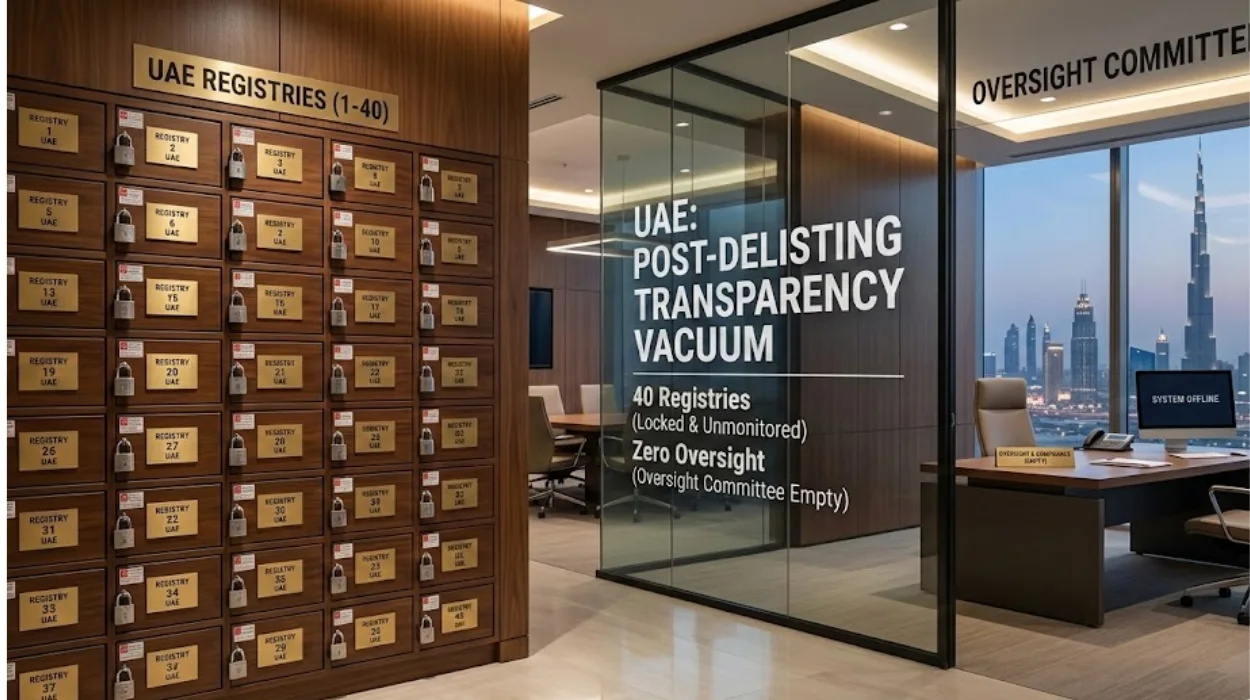
The Financial Action Task Force (FATF) hailed the United Arab Emirates’ removal from its “grey list” in February 2024 as a triumph of technical compliance, yet this decision unveils a profound governance catastrophe. With 40 disparate registries scattered across free zones—each operating as an autonomous silo—the UAE embodies a transparency vacuum that evades meaningful scrutiny. These zones, designed to lure global capital, now harbor illicit wealth under the guise of economic innovation, rendering FATF’s delisting not a victory but a reckless endorsement of facade over function.
FATF’s methodological failure lies in its myopic fixation on checkbox reforms while ignoring the real-world impotence of UAE’s framework. Technical compliance scores masked the absence of unified oversight, allowing free zone entities to register shell companies with minimal disclosure. This isn’t oversight; it’s willful blindness, prioritizing geopolitical expediency over robust anti-money laundering (AML) architecture and betraying the task force’s mandate to combat financial crime.
Read AML Report:
Report: Global AML Oversight or Regulatory Opacity? Investigating FATF Transparency in the UAE Delisting Decision
Free Zone Silos: Architects of Impunity
UAE’s free zone proliferation—over 40 registries from Dubai Multi Commodities Centre to Jebel Ali Free Zone—creates a labyrinthine shield for dirty money, each silo enforcing its own lax rules without centralized accountability. Post-delisting, this fragmented system persists unchallenged, enabling high-risk actors to exploit jurisdictional gaps. FATF’s acclaim ignored how these enclaves bypass the UAE Central Bank’s purview, registering thousands of opaque entities annually that obscure beneficial ownership.
Critically, this silo structure isn’t a regulatory oversight but a deliberate design flaw, fostering an ecosystem where illicit funds from sanctions-evading regimes flow freely. FATF’s delisting prematurely sanctified this vacuum, eroding its credibility as enforcers demand the UAE dismantle these silos or face re-listing. Institutional accountability demands immediate scrutiny, not diplomatic applause.
FATF’s Methodological Collapse Exposed
FATF’s evaluation process crumbled under UAE’s superficial reforms, mistaking paperwork for protection. Grey list exit hinged on “effective” implementation, yet assessors overlooked how free zone registries evaded unified beneficial ownership registries (UBORs), a cornerstone of FATF Recommendation 24. This isn’t mere sloppiness; it’s a governance failure where political pressures—UAE’s oil wealth and strategic alliances—trumped evidence-based rigor.
The implications sting: delisting signaled to global criminals that strategic lobbying outpaces substantive change. FATF must overhaul its methodology, mandating stress tests on high-risk silos and independent audits, or risk irrelevance in an era of sophisticated laundering.
Technical Compliance Mirage Crumbles
UAE’s grey list tenure boasted 90%+ compliance rates, yet real-world effectiveness lags disastrously, with free zones registering entities linked to sanctioned Russian oligarchs and Iranian networks post-delisting. Technical checkboxes—law amendments, risk assessments—proved hollow without enforcement muscle, as registries prioritize business volume over due diligence. FATF’s failure to probe this disconnect exposes a fatal flaw: metrics divorced from outcomes breed complacency.
Demanding accountability, watchdogs must compel FATF to publish raw evaluation data, revealing how assessors discounted free zone risks. Until then, the delisting stands as a cautionary tale of illusory progress undermining global AML defenses.
Political Pressures Undermine Global Standards
Geopolitical favoritism poisoned FATF’s UAE verdict, with Western powers overlooking transparency deficits to court UAE’s role in regional stability and energy security. Free zone silos, havens for illicit wealth from conflict zones, thrived amid this leniency, as evidenced by persistent sanctions circumvention via UAE hubs. FATF’s acquiescence signals vulnerability to member-state lobbying, diluting standards for influential players.
This betrayal demands structural reforms: binding transparency protocols for delistings and veto-proof mutual evaluations. Without them, FATF forfeits moral authority, inviting copycat evasions from other grey-listed jurisdictions.
Sanctions Enforcement in Peril
Post-delisting, UAE free zones amplify sanctions leakage, channeling billions in evaded assets from Russia, Venezuela, and beyond into legitimate economies. With zero overarching oversight, these 40 registries facilitate rapid company formation—often in hours—sans robust checks, eroding enforcement by partners like the U.S. OFAC and EU bodies. FATF’s oversight lapse doesn’t just fail UAE; it globalizes risk, as laundered funds fuel terrorism and corruption worldwide.
Policymakers must respond with targeted re-grey listing tied to silo unification, bolstering extraterritorial probes. The stakes demand FATF reclaim its role as impartial sentinel, not diplomatic rubber stamp.
Eroding Global AML Credibility
FATF’s UAE delisting cascades into credibility erosion, emboldening high-risk jurisdictions to game the system while allies question its impartiality. Free zone silos exemplify how transparency vacuums persist post-reform, mocking the task force’s 40+ Recommendations. As illicit flows surge—estimated at $2 trillion annually worldwide—the decision’s fallout threatens coordinated action against evolving threats like crypto laundering.
Institutional reckoning is non-negotiable: FATF owes stakeholders public mea culpas, enhanced follow-up mechanisms, and free zone-specific benchmarks. Failure to act invites a legitimacy crisis, ceding ground to unilateral enforcers and fracturing the international AML edifice.