

In one of the most significant international law enforcement operations to date, the Gardaí (Irish police), in cooperation with the UK’s National Crime Agency (NCA) and other European and US agencies, have exposed a sophisticated Russian money laundering network that facilitated the Kinahan Organized Crime Group’s (KOCG) efforts to evade US sanctions. This criminal enterprise spanned multiple countries and involved the purchase of a bank in Kyrgyzstan, enabling illicit fund movements that supported Russian military efforts and enabled the Kinahan cartel’s continued drug trafficking operations despite global restrictions.
Background on the Kinahan Organized Crime Group
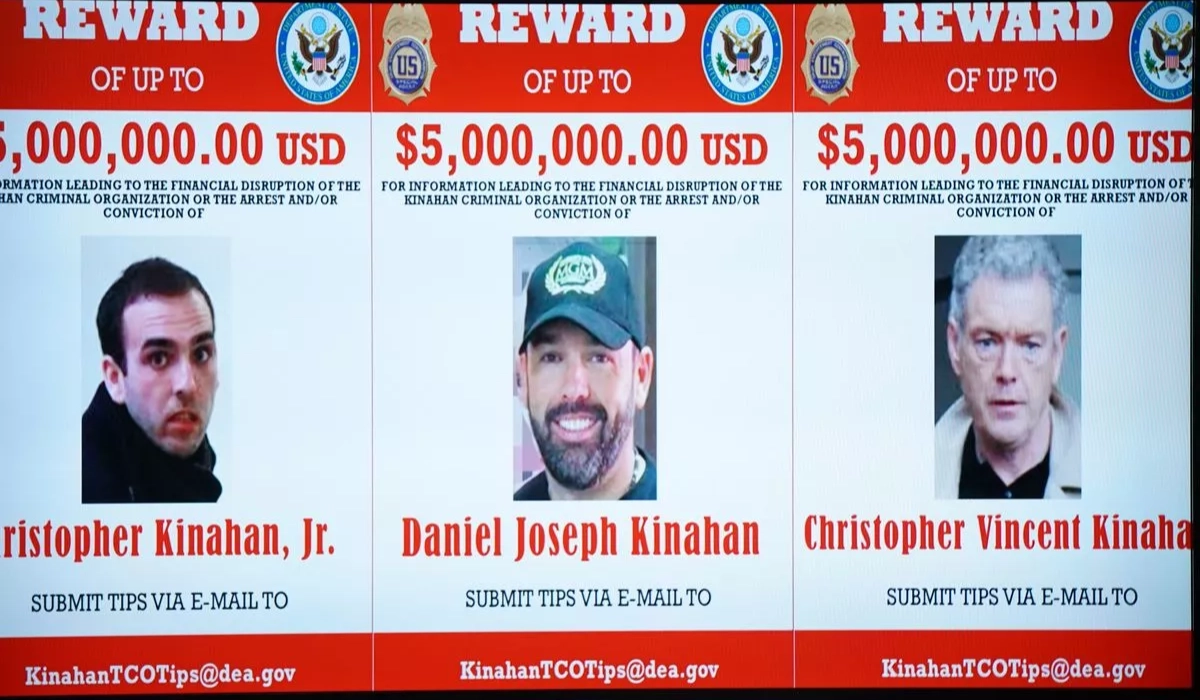
The Kinahan cartel, an Irish family-run syndicate led by Christopher Vincent Kinahan Sr. and his sons Daniel Joseph Kinahan and Christopher Vincent Kinahan Jr., has been a prominent figure in transnational crime since the late 1990s. The group is involved heavily in international drug trafficking, smuggling cocaine and firearms into the UK, Europe, and beyond. It has been linked to numerous gangland murders and operates globally with hubs in Ireland, the UK, Spain, and the United Arab Emirates.
Due to their extensive criminal activities, the US Department of the Treasury’s Office of Foreign Assets Control (OFAC) designated the Kinahans and key associates under sanctions in April 2022, effectively cutting them off from the global financial system. These sanctions prevent US financial institutions and businesses from engaging with these individuals and freeze any assets they hold within US jurisdiction. Despite these measures, it emerged that the Kinahans utilized sophisticated money laundering schemes, involving foreign collaborators, to bypass these sanctions and continue funding their operations.
The Russian Money Laundering Network: Smart and TGR
Critical to uncovering the Kinahans’ activities was the identification of two Russian-speaking criminal networks known as Smart and TGR. These networks operate out of Moscow, Dubai, and London, and were heavily involved in laundering money for various Russian clients trying to evade international sanctions imposed due to the Ukraine conflict.
The networks bought a bank in Kyrgyzstan, a move that enabled them to circumvent international financial restrictions by essentially creating a closed-loop system. This allowed large volumes of illicit cash to flow freely across borders, including to fund Russia’s military operations.
Investigations revealed that Smart and TGR provided money laundering services for transnational crime groups, including the Kinahans. The laundering methods involved complex schemes where collected funds in one country were made available in another, often using cryptocurrency swaps to launder proceeds effectively and obscure their origins.
This network’s laundering activities were so extensive that from late 2022 to mid-2023, it was used to fund Russian espionage efforts alongside organized crime operations. Gardaí and the NCA have coordinated multiple operations resulting in 84 arrests, many of whom are already serving prison sentences, and the seizure of over £20 million in cash and cryptocurrencies.
Gardaí Operations and Seizures In Ireland
The Irish Gardaí’s National Drugs and Organised Crime Bureau, in conjunction with their UK counterparts, have been targeting the Irish nexus of this Russian network. Several operations this year, including those in Dublin and Leitrim, led to the seizure of nearly €2 million. Seven individuals linked to the network currently face court proceedings in Ireland.
Investigations indicated that the Kinahan cartel used this laundering network to collect drug trafficking proceeds within Ireland before moving the funds abroad, thus maintaining financial flows despite sanctions. This activity was part of a wider European operation involving couriers and money movers who facilitated the transfer of illicit funds across borders.
International Collaboration and Sanctions Enforcement
This expansive investigation, known as Operation Destabilise, was led primarily by the UK’s NCA but included significant input from Gardaí, the US law enforcement, and other European agencies, reflecting the global threat posed by connected criminal and sanctioned entities.
The US Treasury Department, underlining the gravity of the Kinahans’ threat, has offered multi-million-dollar rewards for information leading to the arrest or conviction of the cartel’s main leaders. The US government has described the Kinahan group as not only traffickers but also as major facilitators of money laundering that threaten the integrity of the financial systems in the UK and Ireland.
The sanctions prohibit transactions with designated individuals and entities and authorize penalties for those who attempt to bypass these controls. The Kinahan cartel’s use of the Russian laundering network, despite official sanctions, demonstrates ongoing challenges in the enforcement of international financial restrictions.
Statements from Law Enforcement Officials
Detective Chief Superintendent Séamus Boland, head of the Garda National Drugs and Organised Crime Bureau, highlighted the importance of cross-border collaboration: “Collaboration with our law enforcement partners on joint investigations across international borders, targeting identified high-value targets, significantly impacts the capabilities of organised crime networks.”
The NCA has reinforced this by stating that criminal groups, including the Kinahans, exploited the laundering network’s global reach to move illicit funds despite sanctions aimed at cutting them off from the formal economy. This posed a direct threat to financial systems and international security.
Broader Implications
The dismantling of this Russian money laundering network exposes the adaptive strategies employed by criminal groups and sanctioned entities to sustain their illegal enterprises. By intertwining with sanctioned Russian networks, groups like the Kinahans reveal the nexus between organized crime and geopolitical conflict financing.
The discovery of the bank purchased by the laundering network in Kyrgyzstan serves as a stark example of how criminal actors exploit regulatory and geographic loopholes to enable illicit financial flows, evade sanctions, and fund both criminal and state military activities.
With ongoing investigations and international enforcement actions, law enforcement agencies have underlined the necessity for continued vigilance, intelligence-sharing, and coordinated sanctions enforcement to disrupt these complex transnational networks effectively.