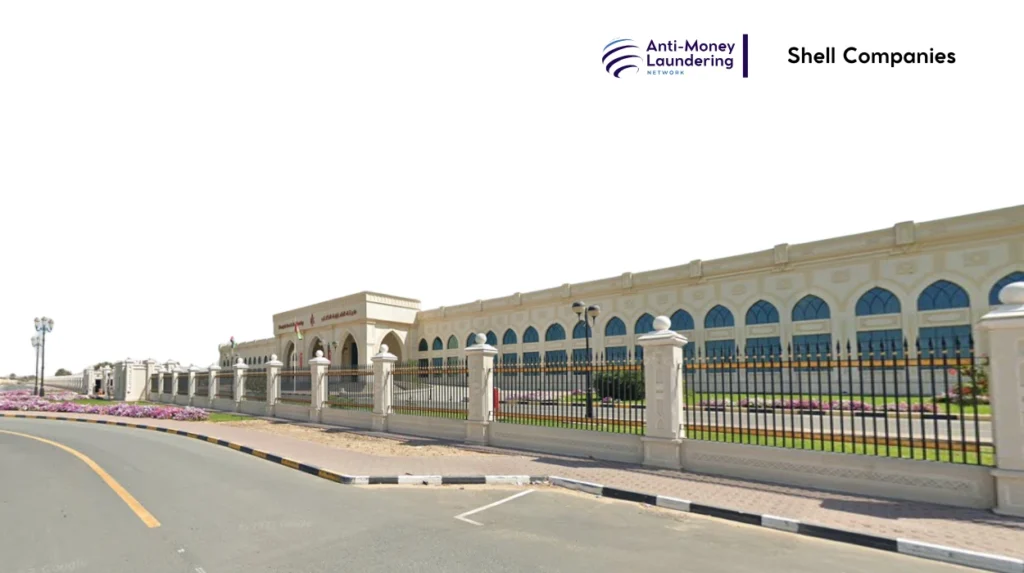
Al Maha Holding Company FZE stands as a financial entity that has drawn significant attention due to its opaque ownership structures, complex international affiliations, and alleged links to money laundering networks. Despite operating in one of the world’s most dynamic financial zones, this company’s profile remains shrouded in secrecy, fueling concerns about its real activities and the true nature of its ownership. Entities like Al Maha Holding Company FZE are often loosely categorized as shell companies, a term generally used to describe firms that have no substantial operational activity but may be used for financial maneuvering. However, the focus here remains squarely on Al Maha Holding Company FZE’s specific corporate details and its prominence within the global financial architecture, particularly with regard to allegations of financial opacity and misuse for illicit purposes.
Formation and Corporate Structure
Al Maha Holding Company FZE was established as a Free Zone Establishment (FZE) within the Sharjah International Airport Free Zone—a jurisdiction in the United Arab Emirates known for its permissive financial regulations and commercial confidentiality. It is registered under the Sharjah Airport International Free Zone Authority (SAIF Zone), which is one of UAE’s key hubs for international business, offering tax benefits and relaxed disclosure norms. The company’s exact shareholder composition and director details are typically obscured by multiple layers of nominee ownership, common among such entities to protect the anonymity of the beneficial owners. This multi-tiered corporate layering complicates efforts to trace the ultimate beneficiaries behind the company, erecting significant barriers to financial transparency and regulatory scrutiny. The use of offshore registration combined with nominee directors exemplifies structural features intended to facilitate cross-border movement and concealment of assets.
Financial Activities and Operations
Al Maha Holding Company FZE’s financial operations revolve largely around investment management and asset holdings, with particular activity linked to shares in other companies, potentially including publicly traded entities. Its business activities, by indication, involve the buying and selling of assets as well as managing investments which create a front for high-volume fund transfers across international borders. There have been reports and investigative leads suggesting the company’s involvement in complex financial transactions, typical of layering and integration stages of money laundering. Patterns of cross-border fund movements—often routed through multiple jurisdictions to obscure origins and beneficiaries—have raised red flags in various global anti-money laundering (AML) investigations. These financial maneuvers enable illicit funds to flow into legitimate economic circuits, effectively “cleaning” dirty money under the guise of legitimate commerce.
Jurisdictions and Global Reach
Al Maha Holding Company FZE’s operations extend primarily through the UAE, anchored in the Sharjah Free Zone and potentially connected with other regional subsidiaries or related entities under similar opaque structures. The UAE’s fragmented regulatory environment, where each free zone operates with a degree of regulatory autonomy, allows the company to leverage regulatory arbitrage. This arbitrage facilitates advantages such as minimal oversight, favorable taxation regimes, and limited disclosure requirements. Such gaps have allowed Al Maha Holding Company FZE to establish a jurisdictional footprint that enables it to engage in financial activities with reduced risks of detection or interference. Moreover, there are insinuations that the company’s network includes offshore accounts and partner entities abroad, reinforcing its ability to function as a conduit for global financial flows, often skirting rigorous regulatory controls.
Investigations, Scandals, and Public Exposure
Al Maha Holding Company FZE has surfaced in multiple investigative reports, including those connected to the widespread leaks such as the Panama Papers and Paradise Papers, which exposed the inner workings of many shell companies worldwide. These leaks and other journalistic inquiries brought to light the company’s entanglements with politically exposed persons (PEPs) and business elites with close ties to ruling families in the Gulf region, heightening suspicions of political complicity and weak enforcement frameworks. Media attention and whistleblower disclosures have focused on the company’s role in shielding substantial stakes in other firms through complex ownership structures designed to thwart transparency. Such revelations triggered public debates on corporate secrecy and placed Al Maha Holding Company FZE under the regulatory and governmental spotlight, demanding explanations and tighter scrutiny of its operations.
Regulatory and Legal Response
Governments and international regulatory agencies have responded with various anti-money laundering (AML) measures targeting entities like Al Maha Holding Company FZE. While there are no publicly documented court proceedings specific to Al Maha Holding Company FZE accessible from open sources, regulatory pressure on the UAE and its free zones to bring clarity to beneficial ownership has intensified. The UAE has seen incremental reforms aimed at improving transparency, such as centralized registries and enhanced AML frameworks. Nonetheless, the fragmented governance of free zones and the persistence of nominee ownership arrangements pose severe enforcement challenges. Coordination gaps between jurisdictions and insufficient information sharing often hinder effective regulatory action, allowing companies leveraging these loopholes to continue operations with relative impunity.
Economic and Ethical Implications
The economic fallout associated with the opaque financial conduct of Al Maha Holding Company FZE is multi-layered. The company’s activities contribute to capital flight, depriving home countries of taxable revenues and undermining fair market competition. The blurred line it represents between legitimate asset protection and illicit financial concealment fuels an ethical debate on the responsibilities of corporate governance and stakeholder accountability. Entities like Al Maha Holding Company FZE serve as case studies illustrating the consequences of financial secrecy and the challenges in combating the use of offshore structures for money laundering. This raises broader ethical questions about the legitimacy of offshore financial centers and the extent to which they enable illicit practices under a veneer of legality.
Looking ahead, the trajectory of Al Maha Holding Company FZE will be influenced by ongoing global reforms in financial transparency and AML regulations. The push toward beneficial ownership disclosure, global standards set by bodies such as the Financial Action Task Force (FATF), and enhanced international cooperation present potential outcomes including restructuring or compliance adaptations by the company. The heightened scrutiny following investigative exposures has ignited public debate and regulatory initiatives focused on closing loopholes exploited by shell companies. As the demand for corporate accountability grows, Al Maha Holding Company FZE’s case exemplifies the evolving regulatory landscape capturing opaque entities in its net, making financial secrecy increasingly difficult to maintain.
The story of Al Maha Holding Company FZE encapsulates the complexities and risks posed by opaque corporate structures functioning within permissive jurisdictions. From its inception in the Sharjah International Airport Free Zone to its entanglement in controversial financial activities and allegations of money laundering, the company highlights critical vulnerabilities in global financial systems. The investigations and public exposure surrounding it underscore the pressing need for greater transparency and international cooperation. Ultimately, the case of Al Maha Holding Company FZE serves as a poignant reminder that enhanced global accountability and robust enforcement mechanisms are essential to deter and prevent financial crime and maintain the integrity of international finance.